
Organizing The Kitchen After a Celiac Diagnosis
I’ll never forget standing in the kitchen the day Lucas’s celiac diagnosis came in. I opened a drawer, pulled out a cutting board, and immediately realized…
We’re going to have to replace almost everything.
The toaster.
The cutting boards.
All of the OXO containers I’ve used for years.
If you've lived through this moment, you know the feeling. It’s a mix of grief, overwhelm, and the realization that your whole kitchen needs to work differently… starting now.
It felt daunting for a minute (okay… more than a minute 😅). But then I decided to do what I do best:
Create systems that will make our home feel manageable again.
And today, I want to share exactly how we organized our kitchen to be celiac-friendly… in case you’re standing in your own kitchen right now, wondering where to even begin.
Let’s dive in!
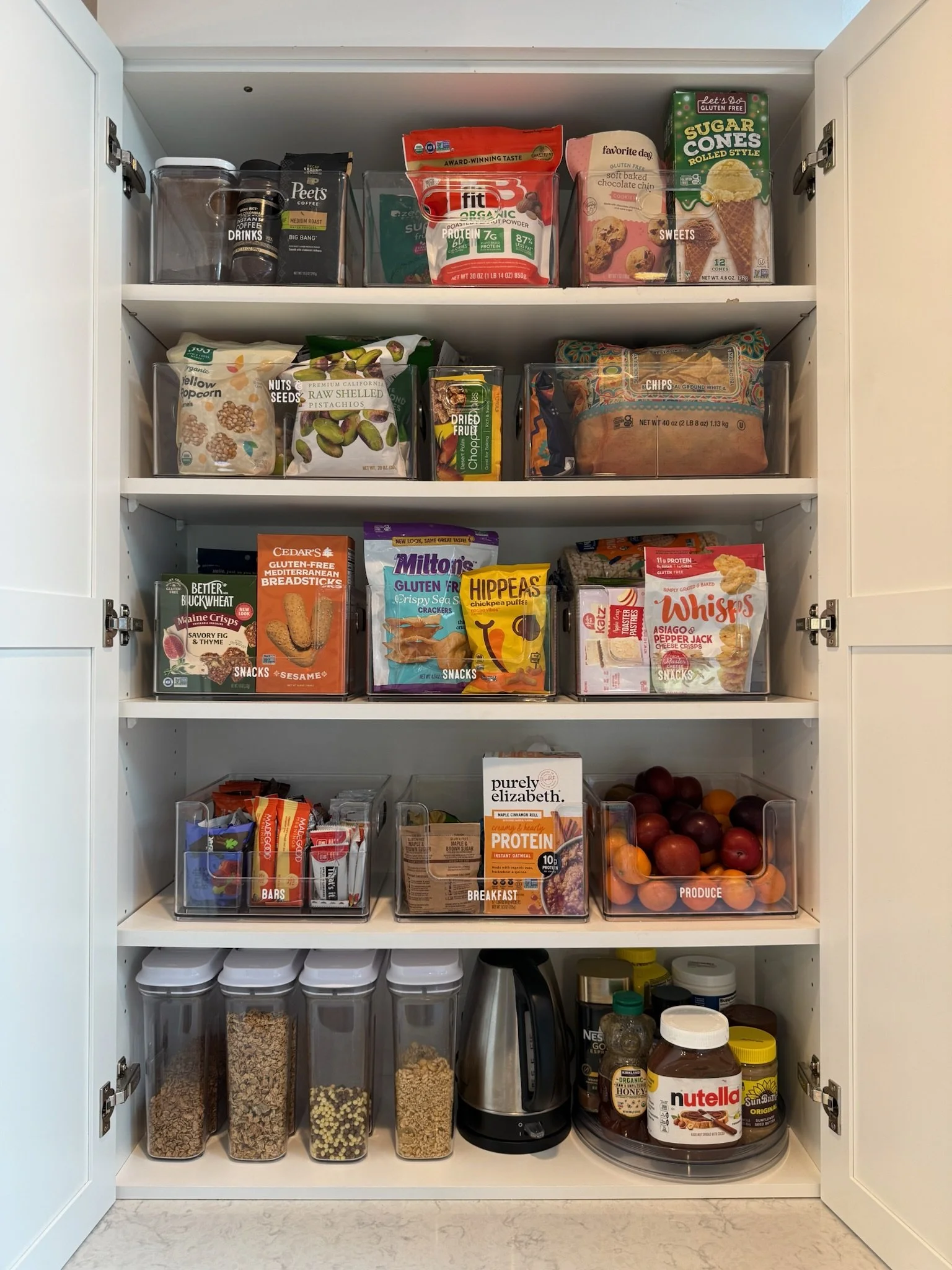
1. We Removed Every Trace of Gluten
Before we brought anything new in, we took everything out.
(Side note: I’ve organized hundreds of kitchens professionally… but doing this for your own child is different. There’s a lot of emotion tucked inside muffin tins and wooden spoons you’ve used for years.)
Anything that couldn’t be fully cleaned or posed even a tiny cross-contamination risk had to go. You don’t realize how far gluten can travel until you’re suddenly responsible for removing it!
We said goodbye to:
Any food containing gluten
Cutting boards
The toaster + toaster oven
Plastic + wooden utensils
Colanders + mesh strainers
Baking sheets, muffin tins, loaf pans
Small appliances like the waffle iron + food processor
All OXO containers (even ones that never contained gluten because of the cross-contamination risk from scooping flour with a measuring cup and then scooping sugar)
Anything that had ever touched gluten and couldn’t be fully scrubbed clean
It felt like a lot. Because it was a lot! But clearing everything created space for us to rebuild intentionally.
Pro Tip: You only need to replace the things that can hold gluten in cracks, scratches, or porous materials. I debated replacing our KitchenAid mixer because there was flour in every nook and cranny, but due to the cost, we decided to disassemble it and deep-clean every crevice.
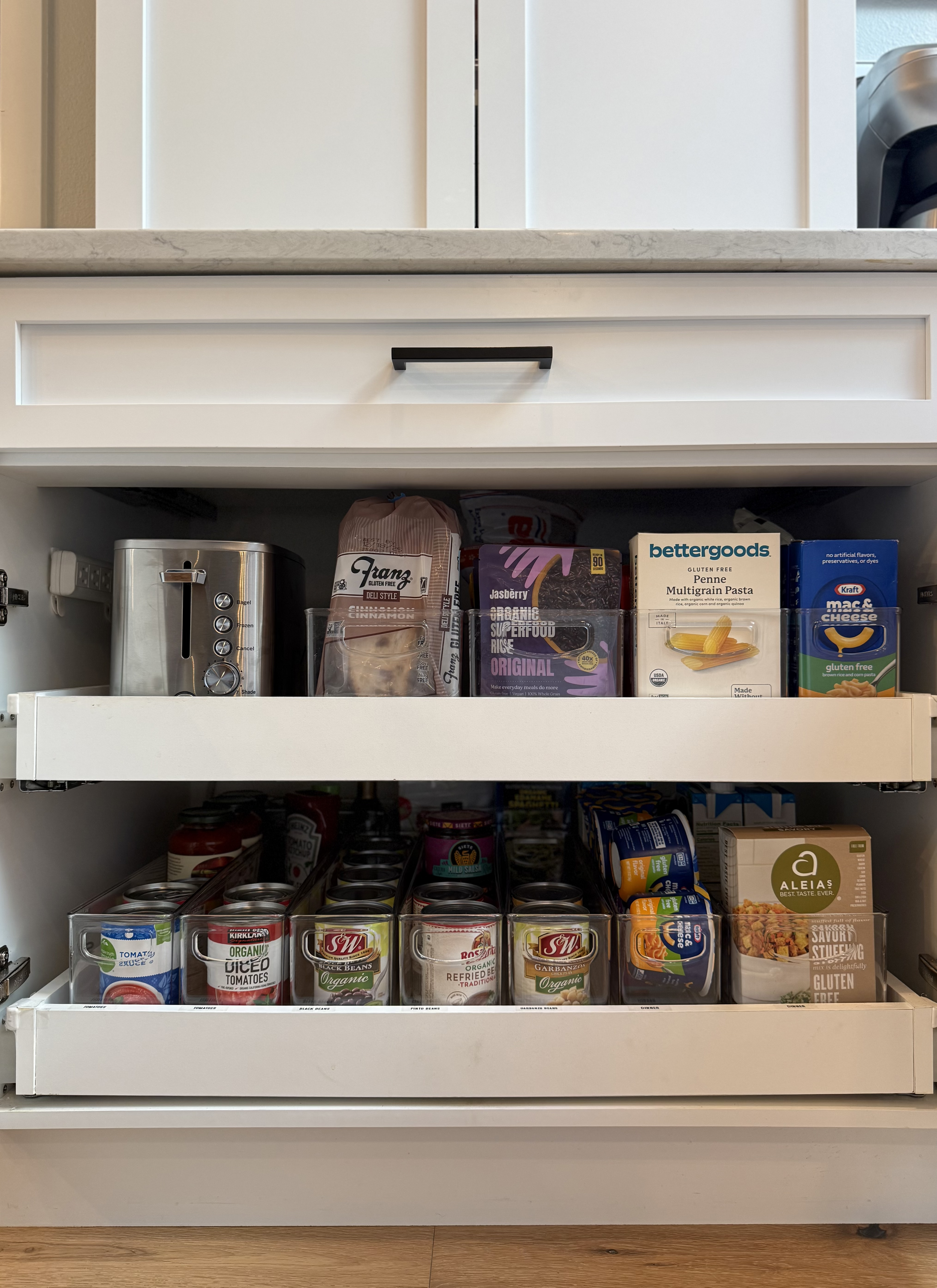
2. We Rebuilt the Kitchen
When Lucas was diagnosed with celiac, our family decided that we were all in this together. When we’re at home, the rest of us are gluten-free too!
So everything in our home is now gluten-free - and that simplicity changed everything. There’s no need to separate foods, create “safe” zones, or explain which cutting board is which.
That clarity allowed us to rebuild our kitchen with complete peace of mind! Part of that process was the very practical (and slightly overwhelming) task of restocking the kitchen from scratch:
All new GF snacks, pastas, cereals, and pantry staples
Fresh, sealed spices
Gluten-free flours + baking mixes
And because some items simply couldn’t be cleaned well enough to trust, we replaced several kitchen tools and appliances too.
But now we have a kitchen we can trust completely!
3. We Organized the Kitchen for How Our Family Lives
Since our entire household is gluten-free, our organization became more about function than restriction.
We asked ourselves:
Where do we naturally reach for baking items?
What do the kids grab for snacks?
What gets used the most during the week?
What needs to be most accessible?
Once we answered those questions, we grouped items accordingly!
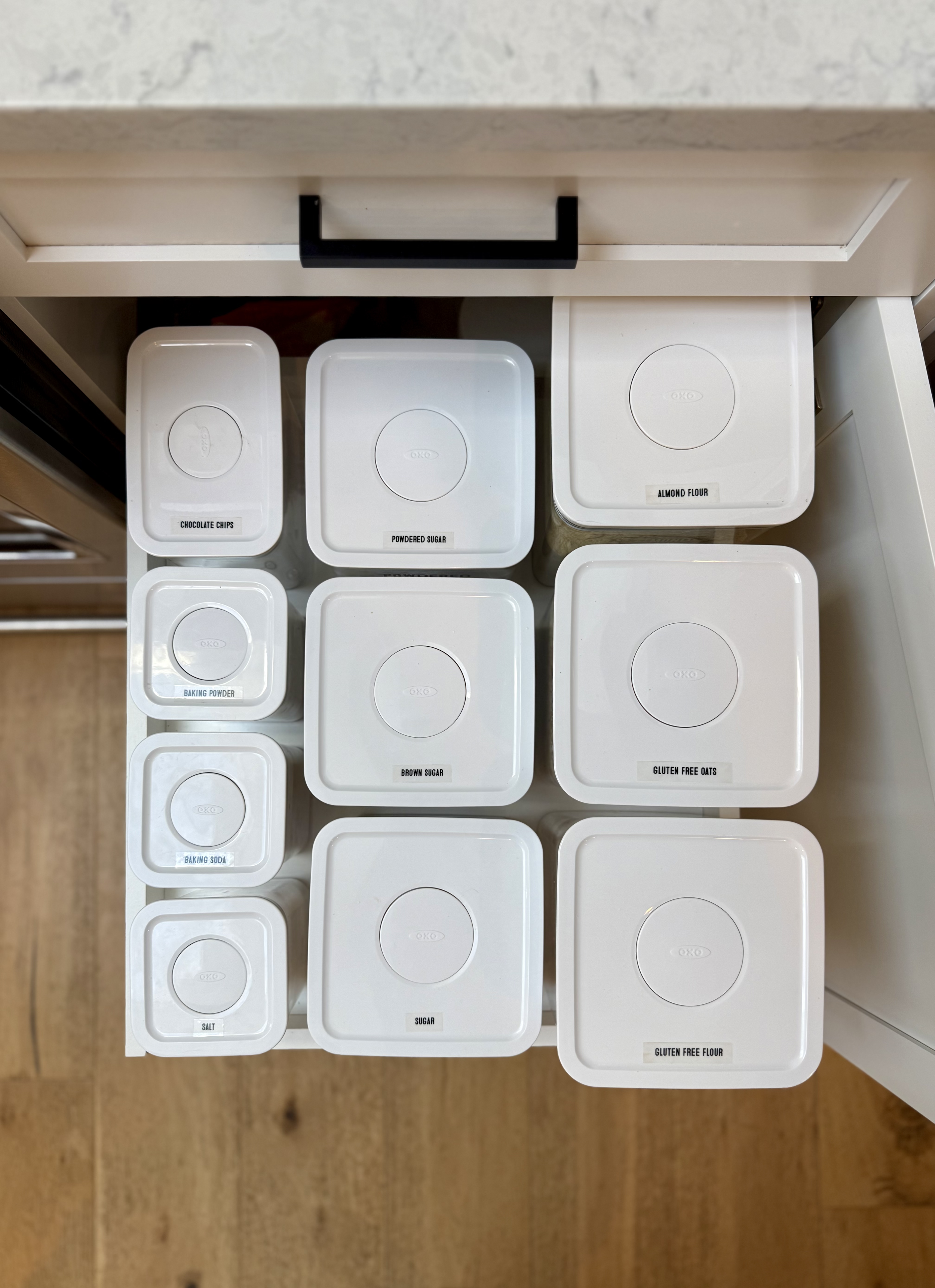
4. We Labeled Everything
Even though we removed all gluten from the house, labeling was still a huge part of our kitchen reset.
Labels help:
Reduce mental load
Make cleanup easier
Help everyone find what they need
Keep ingredients consistent
Maintain the systems we worked hard to build
5. We Built Habits That Support Our New Lifestyle
Here are the habits that have made the biggest difference for us:
Wiping surfaces more frequently
Reading any and all ingredient labels
Not bringing any “unsafe” food into the home
Keeping back stock of our favorite GF foods (when you find something you love, stick with it!)
Weekly meal planning - this saves money, reduces waste, and ensures we’re eating nutritious meals that are within our dietary restrictions (did I mention we’re vegetarian too??)
Regularly checking our baking supplies - GF baking ingredients can multiply (and expire) quickly, so checking them helps avoid clutter
These habits didn’t happen overnight, but they’re becoming more second-nature now that our systems are set up.
As You Start Your Own Celiac-Friendly Kitchen…
If you’re at the beginning of your celiac journey - standing in your own kitchen, wondering how you’re supposed to redo everything - I want you to hear this:
Just take it one step at a time.
Creating a fully gluten-free kitchen isn’t just about tossing old items and buying new ones. It’s about rewriting the way your home supports your family. It’s about safety, yes - but it’s also about ease, confidence, and finding your rhythm again after everything feels disrupted.
And the beautiful thing? Little by little, the overwhelm fades. The new systems start to feel natural and your kitchen begins to feel like yours again.
If you need a little extra support building systems that make your kitchen feel easier and more manageable, we’d love to help you get there. Schedule your complimentary consultation with our team today. ❤️
