
30 Days to a Home That Runs on Autopilot
There was a season when I felt like I was always trying to catch up inside my own house.
It felt like everything was asking for my attention all day long. It wasn’t necessarily overwhelming, but it was constant.
The kitchen counters were filled… again.
The laundry was never fully done.
The pile of donations by the door needed to actually leave the house.
It all added up.
And in a house with two busy kids, a husband working full time, animals everywhere, and a business that lives in my brain at all hours of the day, I realized something important:
If my home needed me to be “on” all the time, there was going to be no time left for myself.
So I stopped trying to stay on top of my home, and started setting it up to run without me. I set up a few small, intentional shifts that changed how my home functions day-to-day.
If you’re finding yourself in the same boat, craving a house that feels calm, predictable, and easy to maintain - this is how you get there in 30 days.
It Starts With Letting Go of Your Ideal Version of Life
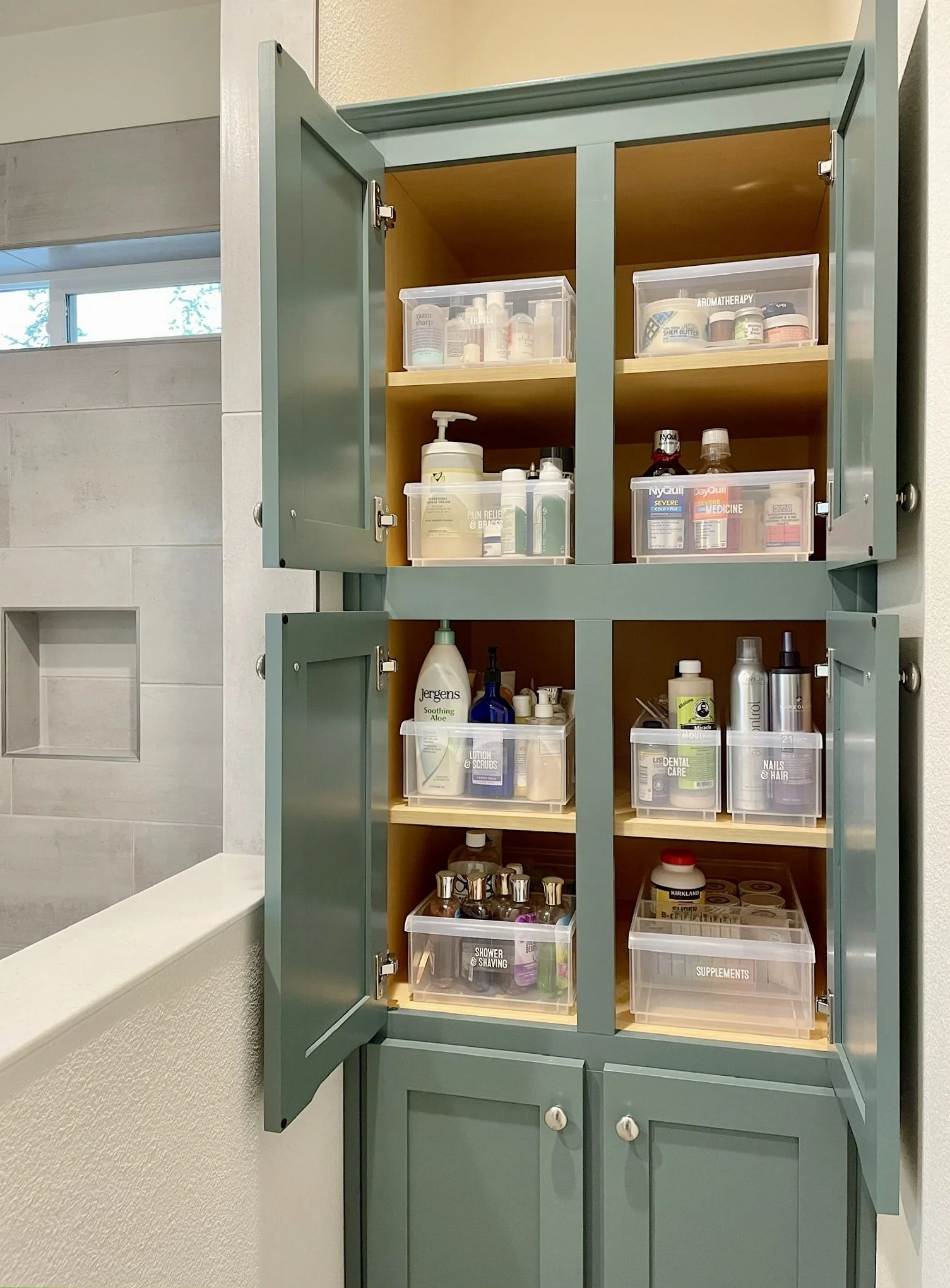
In my home, the big shift happened when I stopped organizing for the life I wished I had - and started organizing for the one I was actually living.
We eat the same meals on repeat because being a vegetarian and gluten-free household is complicated enough.
The kids’ t-shirts get thrown into bins because they can’t be bothered to fold them.
Returns don’t magically get handled unless there’s a place they go immediately.
Once I accepted these things, things got a lot easier!
Week 1: Declutter What’s Slowing You Down
The first week is about clearing out anything that doesn’t belong in your home anymore.
This week, focus on the categories that create daily friction:
The entryway
The kitchen (pantry, utensil drawers, appliance cabinets, etc.)
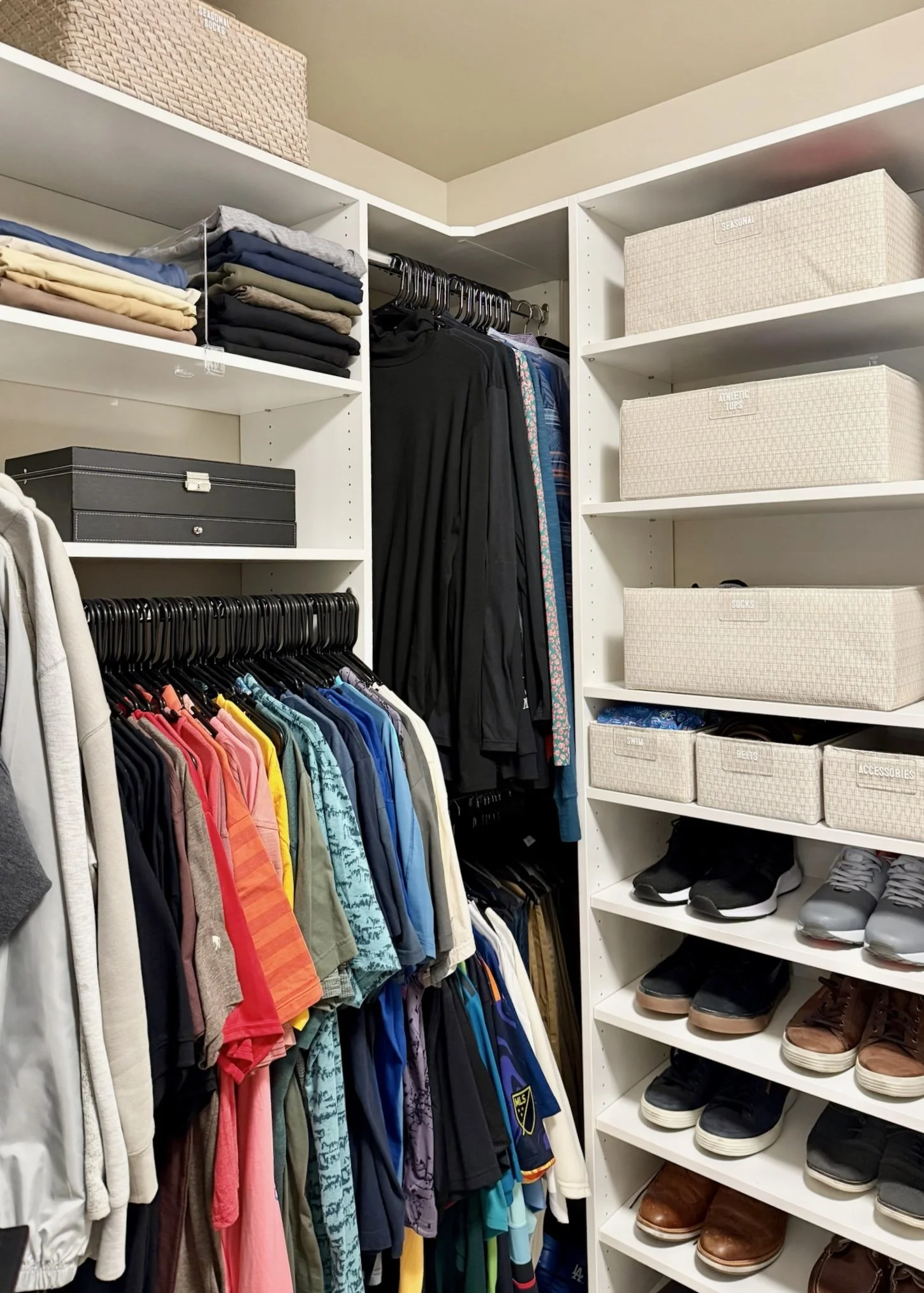
Closets you open every morning
The “miscellaneous” drawer that never quite closes
As you go through these spaces, place each item into one of three categories: Keep, Donate, or Toss.
Pro Tip: To keep up on reducing clutter, create one “Donation” bin and one “Returns” bin to keep in your home. When something doesn’t work, it goes straight in! Then when the bin is full, you know it’s time to take care of what’s in it.
By the end of Week 1, your home should feel far less demanding. But if you want to take your time decluttering, check out this blog post that guides you step-by-step through decluttering your entire home in one month!
Week 2: Set Up Your Daily Rhythms
Now it’s time to set up some routines - this is the week your home begins to take care of itself!
At night, think of it as shutting the house down:
Reset the kitchen (load & start the dishwasher, clear the kitchen counters, etc.)
Put stray items back where they belong
Prep one thing for tomorrow (coffee, lunches, outfits, etc.)
In the morning, do just enough to set the tone for the day ahead (if you “close your house down” properly the night before, you shouldn’t have to do much in the morning):
Make the beds
Empty the dishwasher
Start a load of laundry
None of this should take more than 10 minutes!
Week 3: Remove the Daily Decisions
This is where autopilot really kicks in.
Most home stress comes from having to make the same decisions over and over again. So this week, simplify the big ones:
Meals:
Create a list of dinners you already know everyone in your household will eat, and rotate them! Keep a running grocery list on your phone. Dinner doesn’t need always need to be creative - sometimes consistency is all you need!
Laundry:
Stop saving everything to do all in one day. Smaller, more frequent loads keep it far more manageable.
Paper:
Give incoming mail/papers only three options: To Do, To File, or Recycle. No piles allowed!
The fewer decisions your home asks of you, the calmer it feels.
Week 4: Make Maintenance the Default
By now, your home should feel easier - and this final week is about keeping it that way!
Look at the spaces that still feel tricky and ask yourself:
Is this item hard to put away?
Is the system too complicated?
Does this match how our family actually lives?
Autopilot systems work because they’re simple. Think:
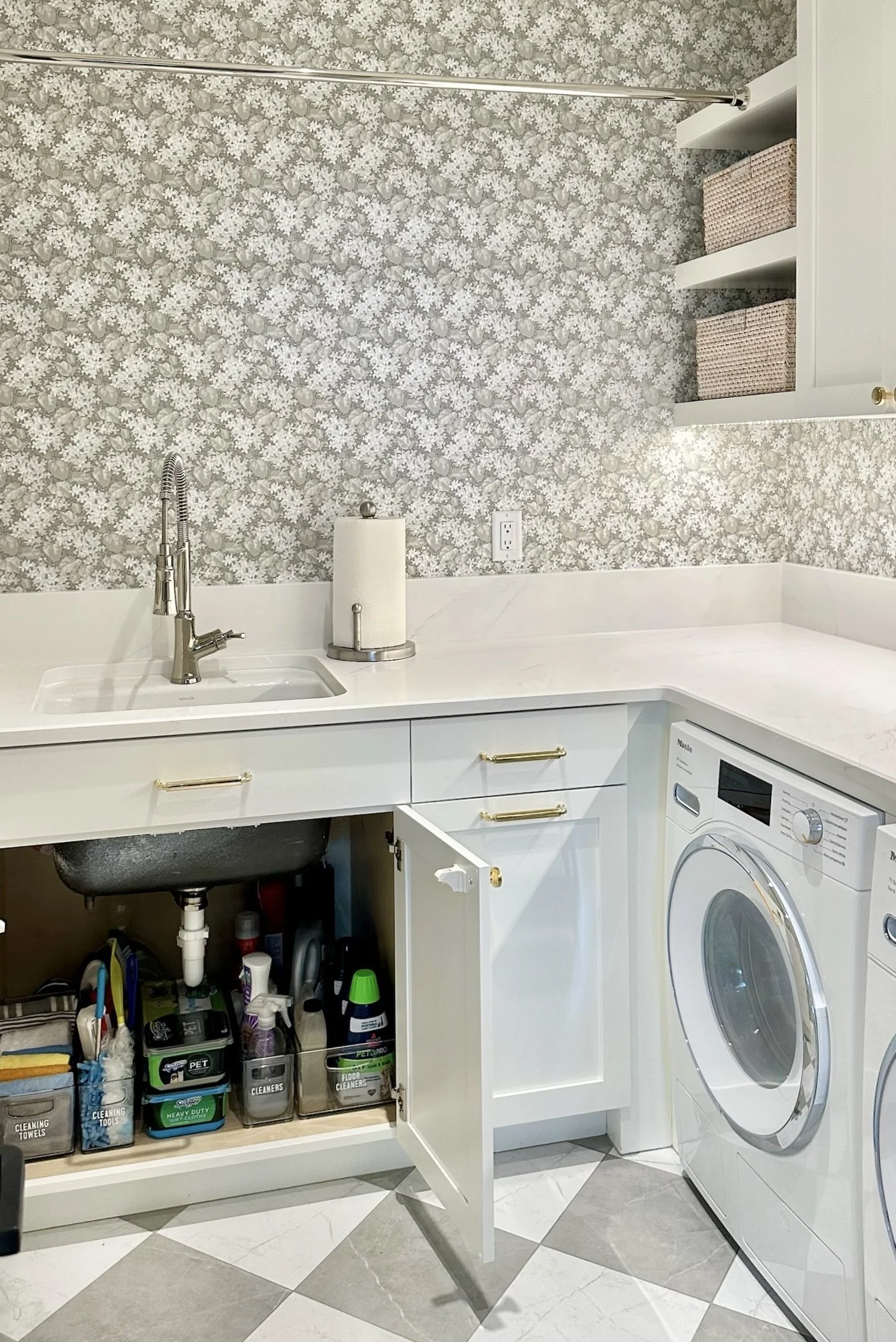
Labels for everything (keep them broad so they can evolve with you)
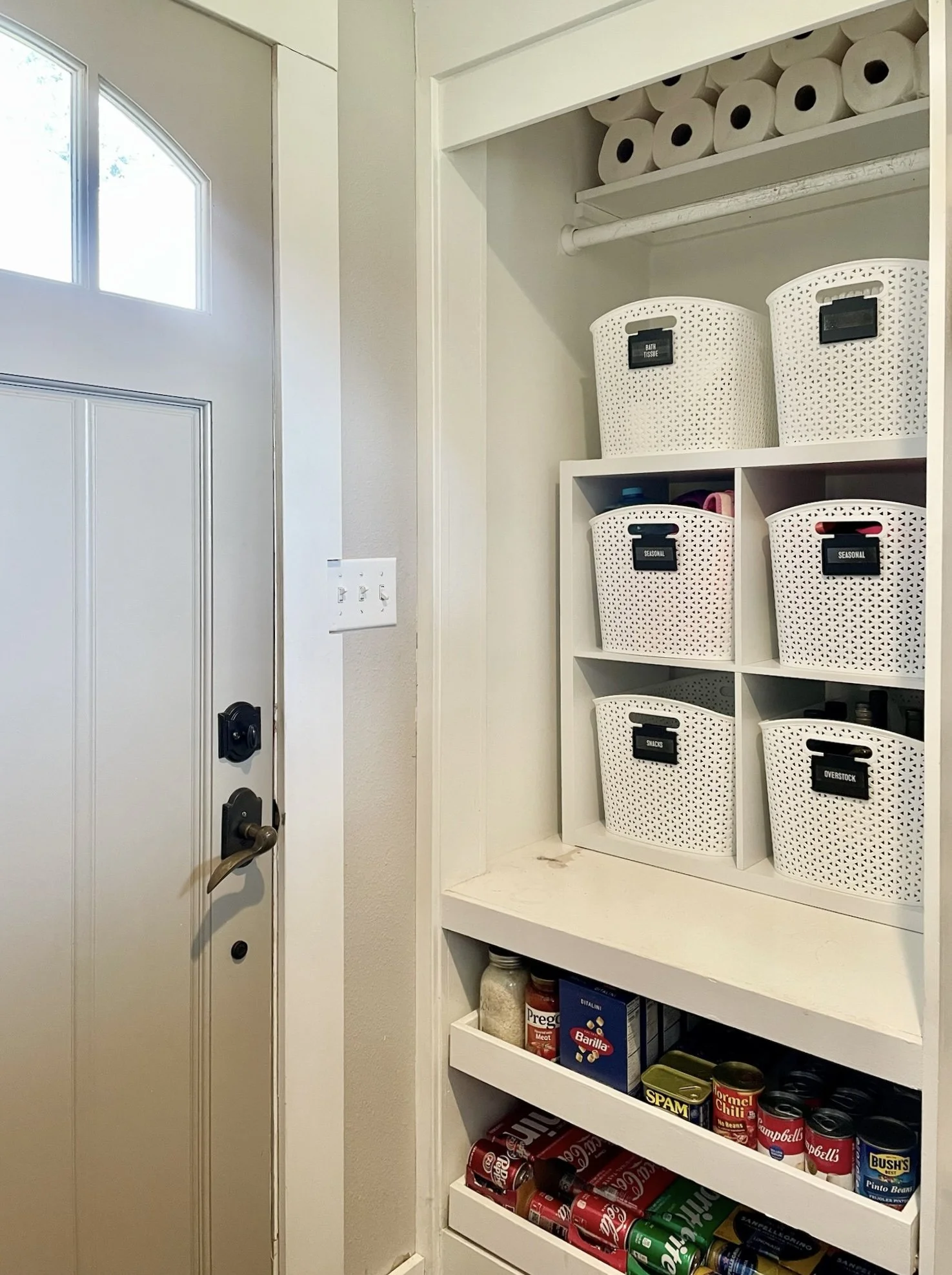
Bins in your linen closet (who even knows how to fold a fitted sheet?!)
Everything in rainbow order (books, clothes, all of it)
When your home really works for you, you’ll spend less time making decisions and wondering where things belong.
What Changes After 30 Days
I’m not promising your house will be perfect, but you will notice:
Mornings feel calmer
Cleaning takes less time
Clutter doesn’t build up the same way
You spend less energy managing your space
And most importantly - your home stops competing with your life. You get more time back that can be spent doing the things you love!
A Peaceful Home Is Built in Moments
The 10 minutes before bed.
The decision to put something away instead of setting it down.
The choice to donate something you haven’t found yourself reaching for.
That’s how homes start running on autopilot.
Not through big weekend overhauls, but through simple systems and daily rhythms.
If you’re ready for that kind of ease, this month can be the beginning. ❤️
And if you need help creating systems that actually fit your life, that’s exactly what we do at The Orderly Space - thoughtful, practical organizing designed to support full, busy lives. If you’re in the Bellingham or Seattle, Washington areas, schedule your complimentary consultation with our team today, and let’s get your home running on autopilot!
