
Organizing with ADHD: Systems That Support Executive Function
If you’ve ever followed all the “right” organizing advice and still ended up feeling frustrated, behind, or wondering why it seems so much harder for you than everyone else - you’re not alone.
My daughter, Kendall, has ADHD, and over the years I’ve watched her try to make systems work that were never built for the way her brain functions. The labels, the bins, the routines… somehow the systems that are supposed to make life easier only add more pressure.
What it’s shown me is that organization isn’t about effort or discipline - it’s about fit. When a home asks too much of memory, focus, or energy, even the most capable people end up feeling like they’re failing.
And truthfully, most organizing systems weren’t designed with sensory needs or executive function challenges in mind. The idea that you’ll always remember where things go, put everything away immediately, or maintain routines without interruption sounds simple on paper… but in real life, it can feel exhausting and discouraging.
So let’s talk about organizing systems that actually meet you where you are!
Why Traditional Organizing Often Fails Neurodivergent Brains
Most organizing systems are built around assumptions like:
You’ll remember where things go
You’ll put items away immediately
You’ll maintain systems through routine alone
You won’t be distracted halfway through a task
For ADHD and other neurodivergent brains, that’s a lot of pressure!
What we actually see with many of our clients is something very different:
Out of sight really does mean out of mind
Decision fatigue sets in quickly
Sensory overwhelm (visual, tactile, auditory) derails progress
Systems that require “extra steps” simply don’t stick
The goal isn’t “perfect systems” - it’s ease.
The Core Principle: Reduce Friction Everywhere
ADHD and sensory-friendly organizing starts with one question:
→ “How can this space require fewer decisions, fewer steps, and less energy?”
If a system is intuitive, visible, and gentle on the nervous system, it’s far more likely to last.
Let’s break down what that actually looks like!
Visibility Is Not Clutter - It’s a Tool
For many neurodivergent brains, visibility is essential.
If something is hidden behind a door, stacked in a deep bin, or tucked away “neatly,” it may as well not exist.
Instead of forcing everything out of sight, we often recommend:
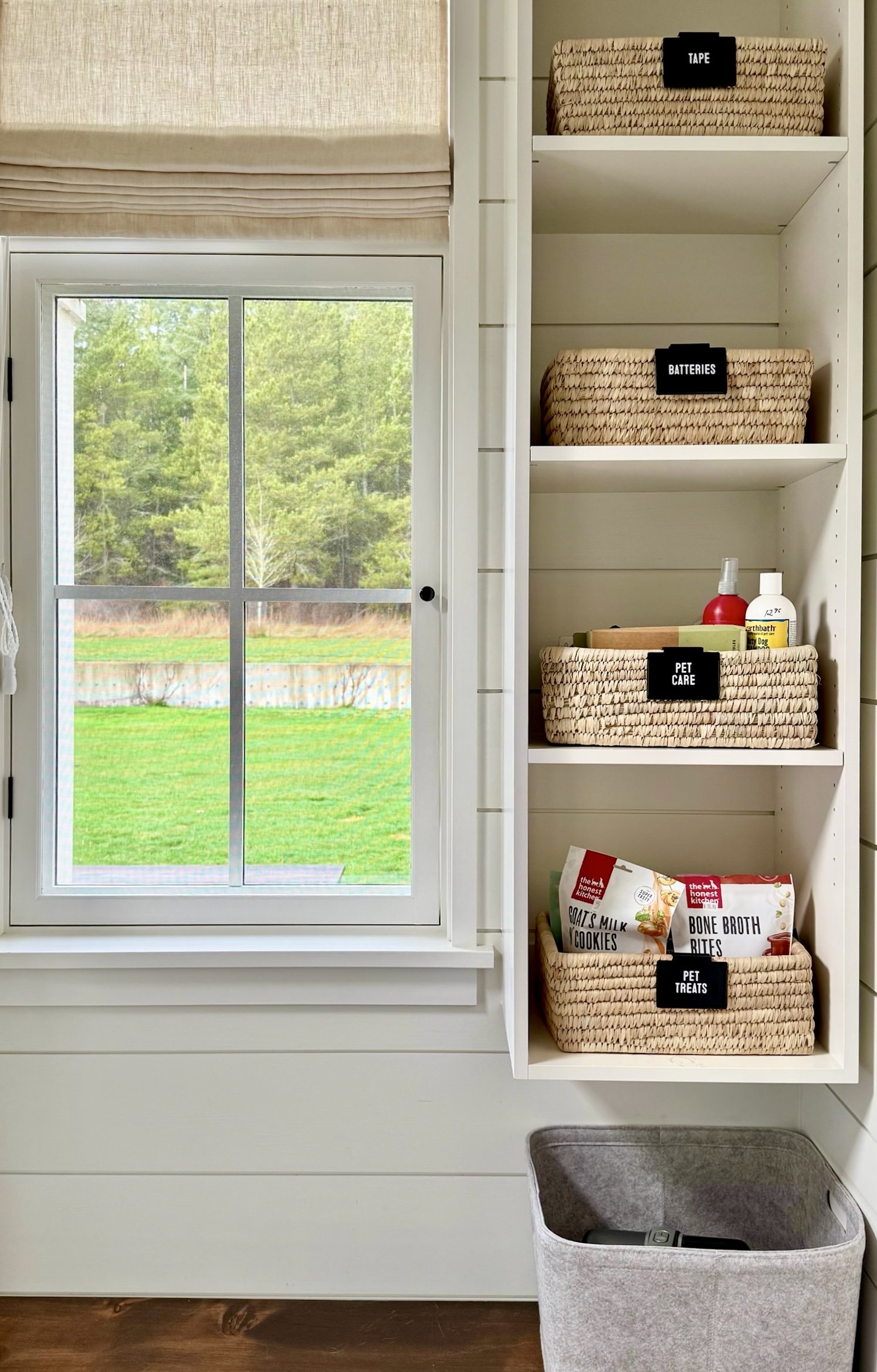
Open shelving for everyday items
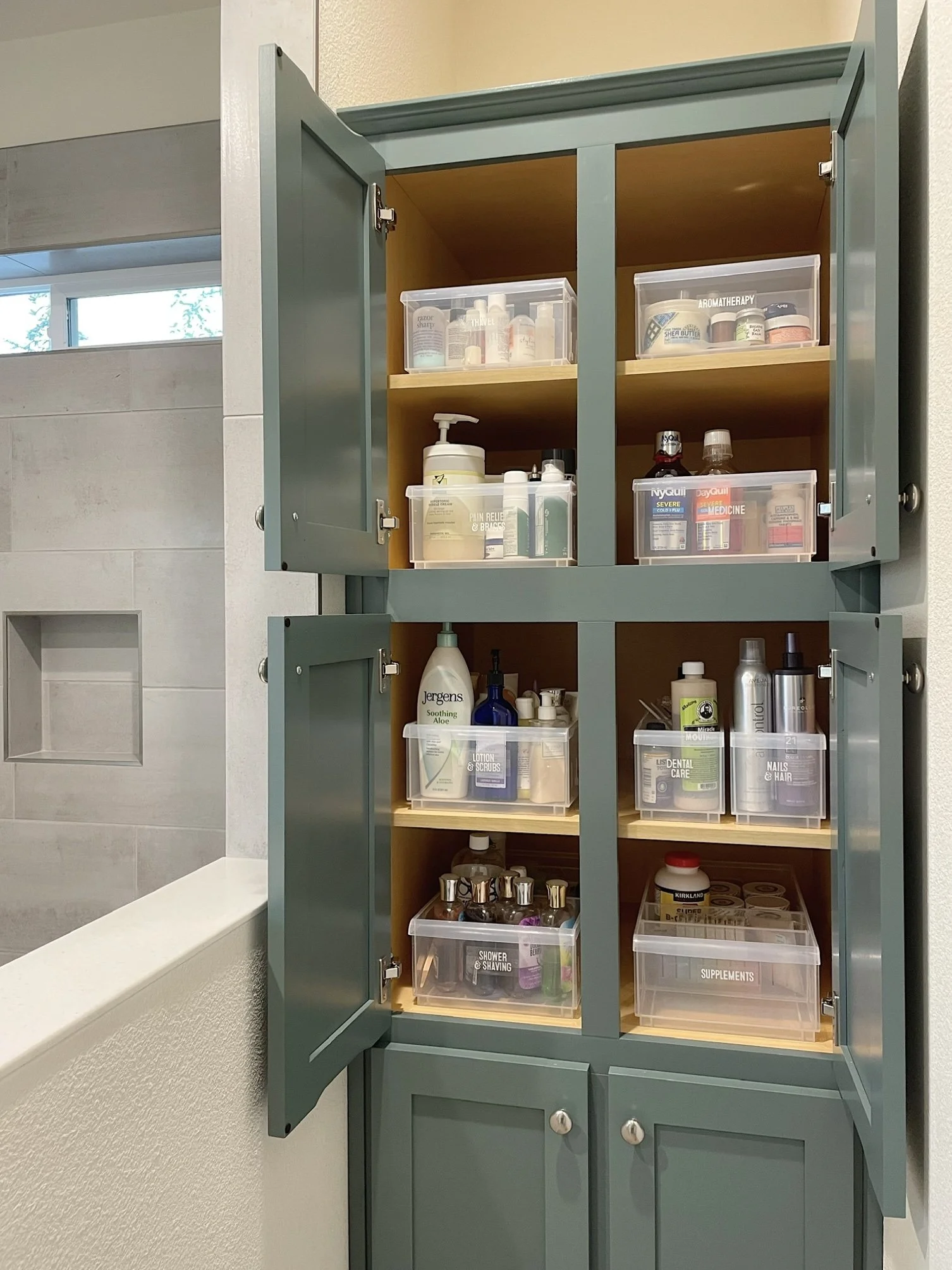
Clear bins (so items don’t disappear)
Hooks instead of hangers
Even removing closet doors in certain spaces
These tips are all about using visibility as a tool to support memory and follow-through.
If seeing it helps you use it, it’s not clutter!
Fewer Categories, Bigger Zones
Micro-sorting is a common organizing mistake - especially for ADHD brains.
Instead of:
Multiple niche categories
Separate bins for every tiny item
Over-labeling
We recommend:
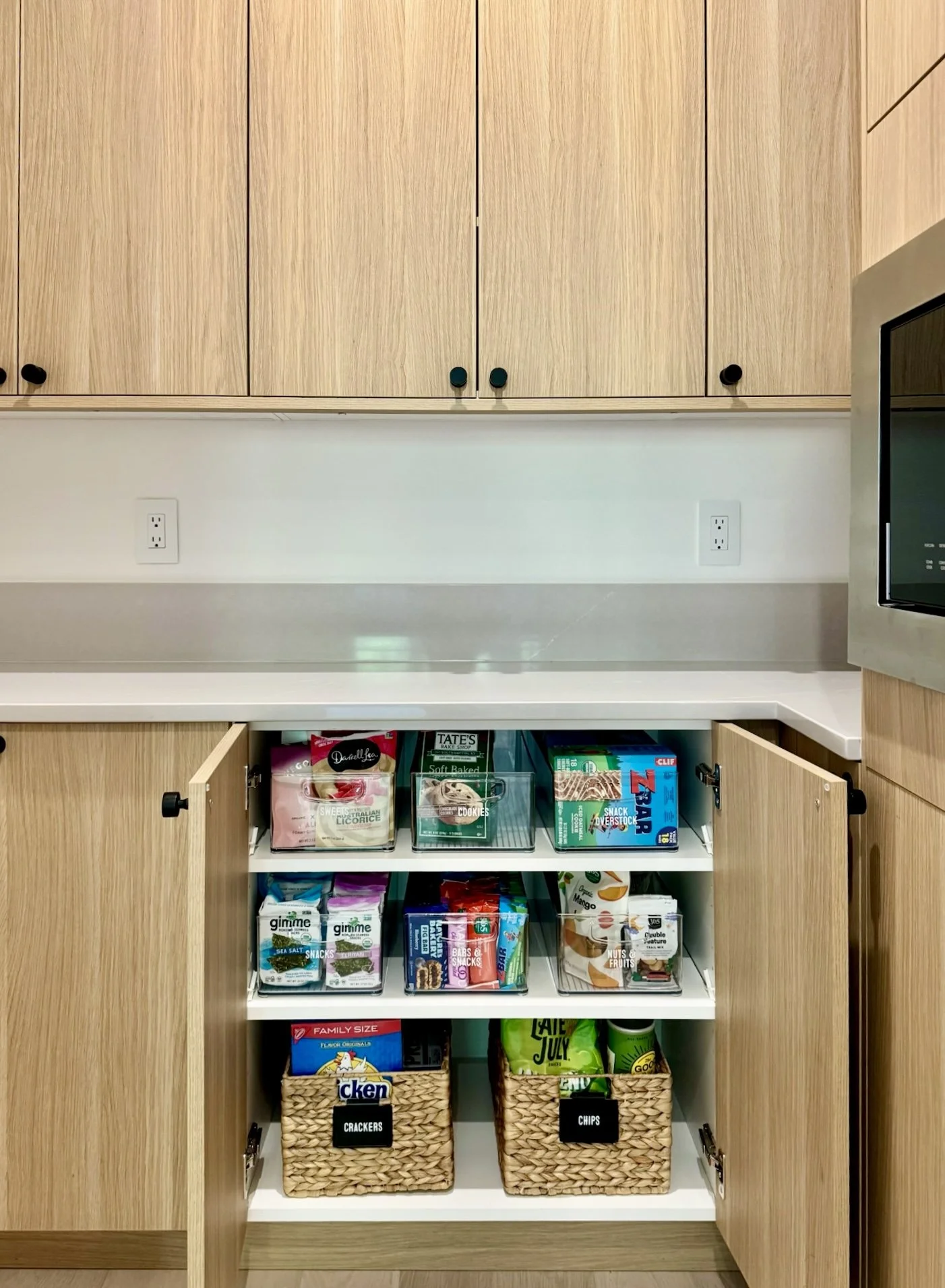
Broad categories (“paper,” not “mail vs. school vs. receipts”)
One clear home per type of item
Containment that allows for imperfection
Here’s a good rule of thumb:
If you have to stop and think about where something goes, the system is too complicated.
Store Things Where Life Actually Happens
One of the most effective shifts we make in neurodivergent homes is organizing by behavior.
Ask:
Where does this item naturally land when you’re done with it?
Where does this item get used?
What’s the path of least resistance?
That might look like:
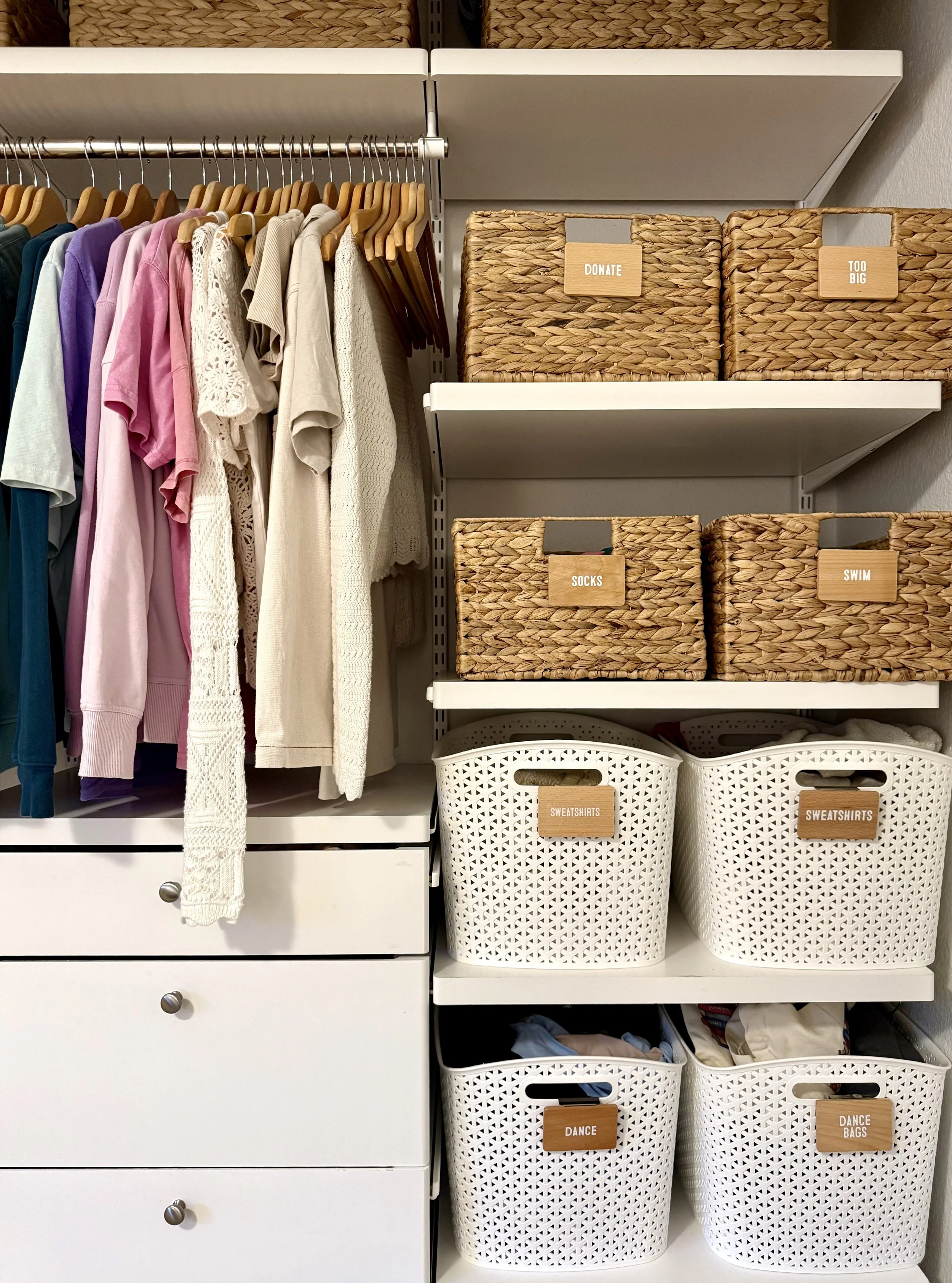
A donation bin living in the primary closet
Medication stored where it’s taken, not where it “should” live
Entryway systems that catch bags, shoes, and keys as soon as you walk through the door
Don’t fight your habits - organize around them!
Make Resetting the Space Nearly Automatic
Maintenance is often the hardest part - not because people don’t care, but because their energy is limited.
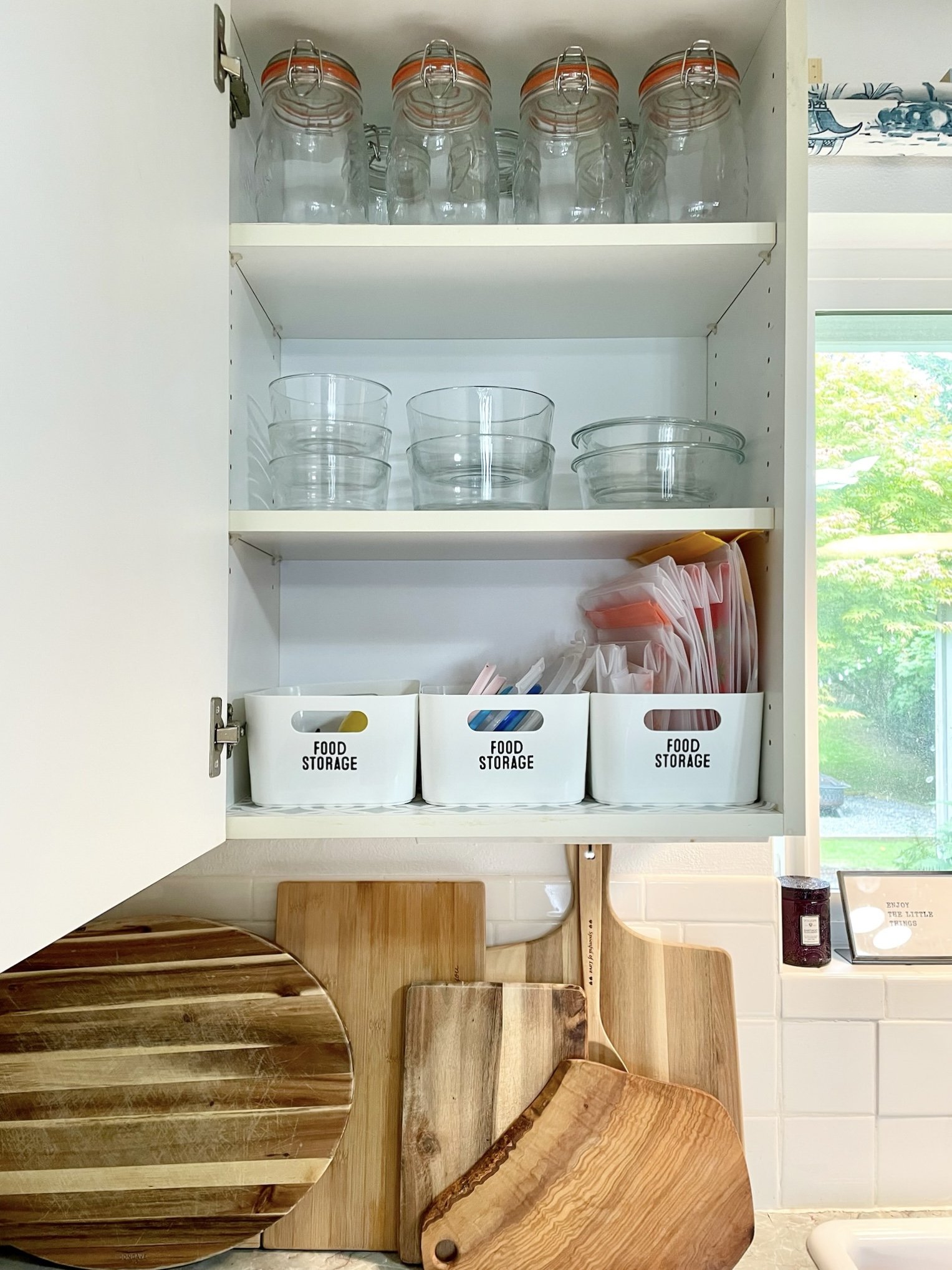
ADHD-friendly homes rely on systems that reset quickly:
Open bins instead of lids
Fewer steps to put things away
Clear visual cues for where items belong
Simple end-of-day drop zones instead of full resets
If resetting takes longer than a few minutes, it’s unlikely to happen consistently.
Labels That Work With the Brain
Labels can be incredibly helpful - or completely overwhelming.
What we see work best:
Large, readable labels
Simple language (no overthinking)
Visual icons for kids or visual processors
Labeling containers instead of shelves
Labels should reduce thinking, not give you another thing to process.
The Most Important System: Compassion
This might be the most important piece of all.
ADHD and sensory-friendly organizing is built on:
Self-trust
Flexibility
Permission to change systems as life changes
Letting go of shame around “messy” seasons
Homes evolve.
Brains evolve.
Your organizing systems should be allowed to evolve too.
Remember: an organized home isn’t one that looks perfect - it’s one that supports your life exactly as it is!
How We Support Neurodivergent Clients at The Orderly Space
When we work with ADHD and neurodivergent clients, we:
Build systems around real routines (not ideal ones)
Consider sensory needs in every space
Prioritize visibility, ease, and flexibility
Create homes that feel supportive - not restrictive
Whether it’s for a child, a busy adult, or an entire household, our goal is the same:
To create spaces that work with your brain, not against it.
Our services are designed to meet every client exactly where they are. If you’re ready for organizing systems that actually stick, we’d love to help!
Schedule a complimentary, no-obligation consultation to learn more. ❤️
